 Prof. Adang Kombe Lucas
| 162 Views
Prof. Adang Kombe Lucas
| 162 Views
Discover the fascinating world of migratory birds — their seasonal journeys, survival strategies, and how you can help protect these vital species. Learn about their migration patterns, the threats they face, and global conservation efforts.
Why Do Birds Migrate?
Every year, billions of birds take flight across continents in one of nature’s most astonishing events — migration. From Arctic terns that fly from pole to pole, to tiny warblers that navigate entire oceans, bird migration is both a marvel of endurance and instinct.
Birds migrate primarily to find food, breed, and escape harsh climates. This journey, often thousands of kilometers long, is deeply tied to seasonal changes and ecological cues. However, these journeys are becoming increasingly perilous due to habitat destruction, climate change, and human activity.
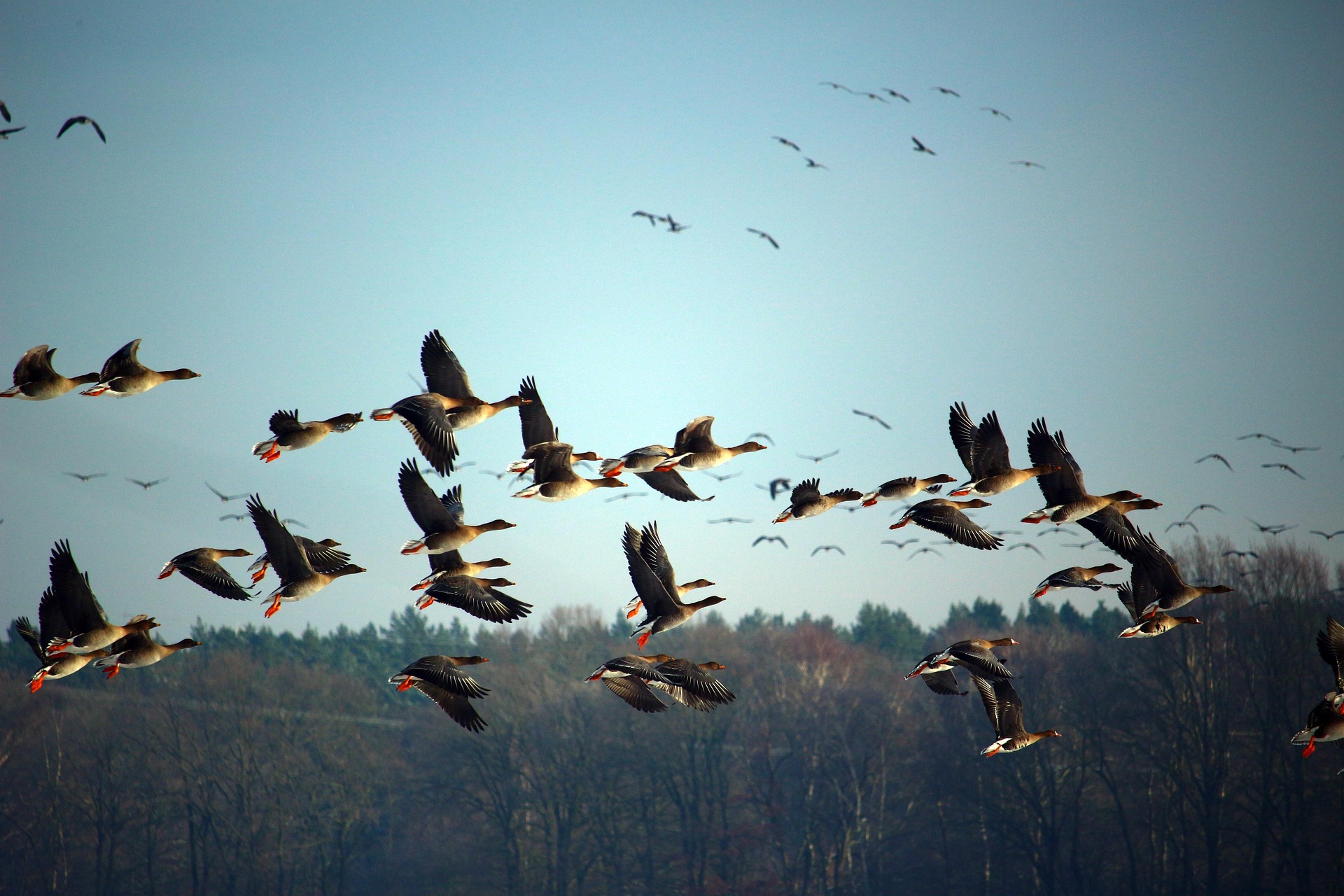
A large flock of birds flying in formation during migration.
Source: pixabay
Types of Bird Migration: A Diverse and Strategic Movement Across the Globe
Bird migration is not a one-size-fits-all phenomenon. It’s a highly evolved survival strategy that varies based on species, geography, climate, and food availability. Understanding the different types of bird migration reveals the complexity behind these extraordinary journeys.
1. Latitudinal Migration (North-South Migration)
This is the most widely recognized form of migration. Birds move between high-latitude breeding areas (often in the Northern Hemisphere) and low-latitude wintering zones (closer to the Equator or Southern Hemisphere). These seasonal shifts are primarily driven by temperature changes and food availability.
Examples:
- Swallows migrate from Europe to Africa each winter.
- Canada Geese fly south during harsh North American winters and return in spring.
- Arctic Terns travel from the Arctic to Antarctica and back — an epic 71,000 km annually.
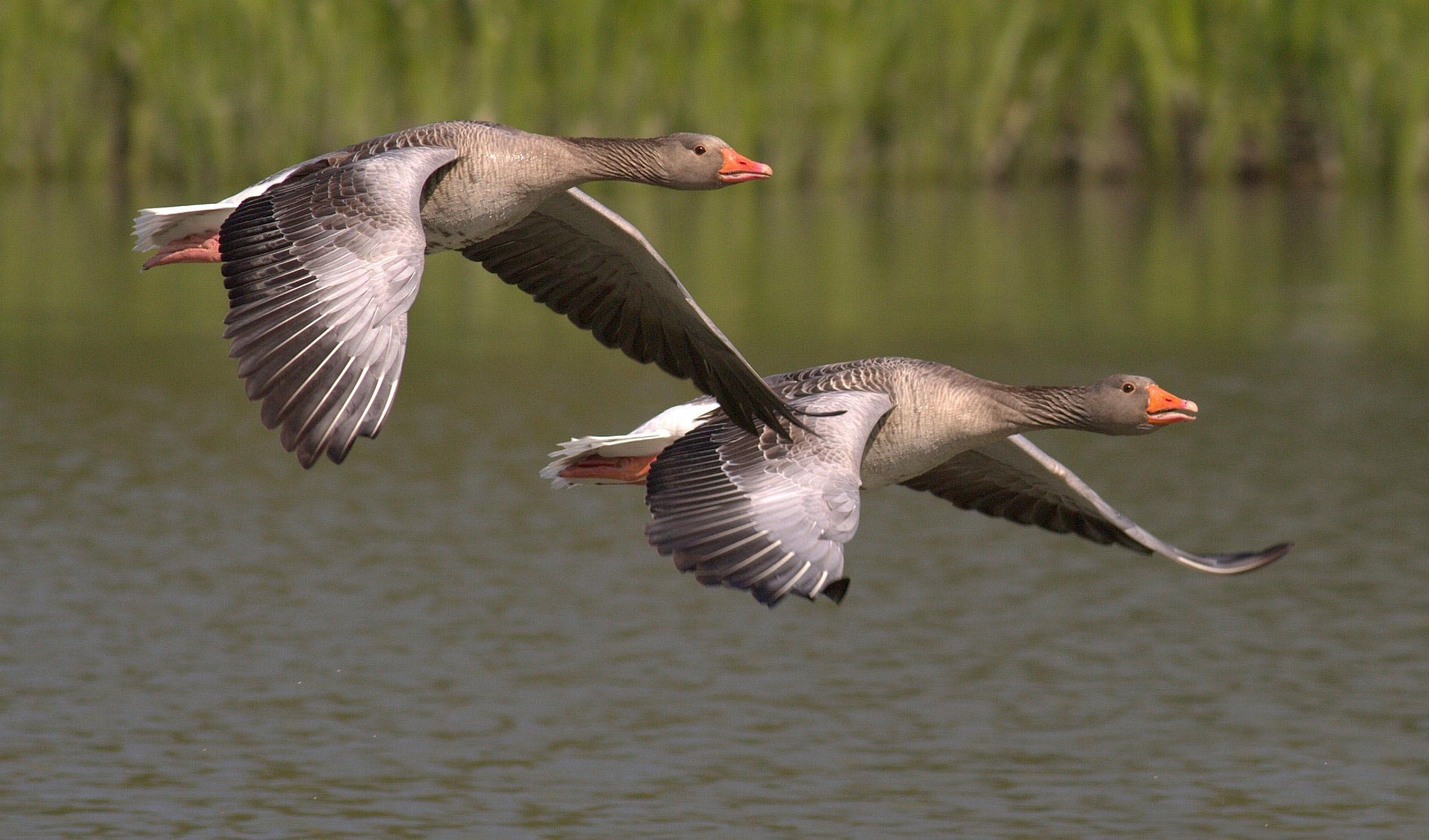
Canada Geese flying southward during winter migration.
Source: pixabay
2. Longitudinal Migration (East-West Migration)
Less common than latitudinal movement, this migration occurs horizontally across continents. It’s often driven by ecological barriers, breeding preferences, or food abundance in specific longitudinal zones.
Examples:
- European cranes breed in Russia and migrate westward to winter in Spain or India.
- Sandhill Cranes in North America migrate east-west across prairies, depending on food and wetland distribution.
This type of migration shows that not all bird species adhere to a north-south axis; some follow food and climate zones stretching sideways across continents.
3. Altitudinal Migration (Mountain-Based Migration)
Altitudinal migration involves vertical movement, where birds descend from high-altitude breeding sites to lower elevations during colder months. These migrations are more localized but are equally vital.
Examples:
- Himalayan Monals and Altai Snowcocks descend from the Himalayan slopes during winter.
- In the Andes, Spectacled Ducks move to valley wetlands when mountain lakes freeze.
This type of migration is crucial in regions like the Himalayas, Andes, Rockies, and Alps, where seasonal extremes are drastic even over short distances.
4. Irregular or Nomadic Migration (Unpredictable Movement)
Unlike the fixed migratory routes of most species, irregular migrants move in response to food shortages, droughts, fires, or sudden climate changes. These migrations aren’t seasonal or predictable but rather survival-based responses to environmental cues.
Examples:
- Waxwings and Crossbills often migrate en masse when conifer seed crops fail.
- Desert birds, like larks, move after rainstorms when food temporarily flourishes.
This unpredictability makes irregular migrants important indicators of ecosystem stress and climate anomalies.
The Science Behind Bird Navigation: How Birds Know Where to Go
Birds possess an innate GPS more advanced than any human technology. Their ability to navigate over oceans, deserts, and continents with astonishing precision has fascinated ornithologists for centuries.
Core Mechanisms Used in Bird Navigation:
1. Celestial Cues (Sun and Stars)
Birds like warblers and buntings navigate using constellations and the position of the sun and stars. Experiments with planetariums have proven that birds recalibrate their migration routes based on star patterns.
2. Earth’s Magnetic Field
Many migratory birds have magnetoreception — a built-in ability to detect magnetic fields. Specialized proteins in their eyes or beaks help them “see” Earth’s magnetic map.
3. Landmarks and Geography
During the day, birds rely on natural features such as mountain ranges, coastlines, and rivers as navigation tools. For instance, storks follow the Nile River southward into Africa.
4. Olfactory and Infrasound Cues
Some species like pigeons use smell and low-frequency sound waves (from oceans or winds) to orient themselves — a lesser-known but critical component of migration.
The Science Behind Bird Migration Patterns | How and Why Birds Migrate
Source: Animal Behavior Corner
Famous Migratory Bird Species and Their Routes
Learning about specific species and their incredible journeys helps us appreciate the scale of bird migration.
1. Arctic Tern (Sterna paradisaea)
- Migration Distance: ~71,000 km annually
- Route: Arctic, Antarctica
- Fun Fact: Sees more daylight than any other animal due to its pole-to-pole route.
2. Bar-headed Goose (Anser indicus)
- Migration Distance: ~1,500–2,500 km
- Route: Central Asia, Indian subcontinent
- Superpower: Flies over the Himalayas at 7,000+ meters altitude — nearly as high as Mount Everest!
3. Blackpoll Warbler (Setophaga striata)
- Migration Route: North America, South America
- Amazing Feat: Travels 3,000+ km non-stop over the Atlantic Ocean.
4. Amur Falcon (Falco amurensis)
- Route: Siberia, Southern Africa via India
- Threat: Faces mass hunting in Northeast India, though successful conservation has reduced this recently.
Flyways: The Aerial Highways of Bird Migration
Flyways are established routes birds use year after year. These act as biological superhighways connecting ecosystems across continents. Each flyway consists of breeding grounds, staging areas (stopovers), and wintering sites.
Major Global Flyways:
- East Atlantic Flyway: Europe, West Africa
- West Asian–East African Flyway: Russia, Middle East, East Africa
- Central Asian Flyway: Siberia, Central Asia, Indian Subcontinent
- East Asian–Australasian Flyway: China, Korea, Japan, Australia and New Zealand
- Pacific Americas Flyway: Alaska, South America
These routes ensure birds have access to freshwater wetlands, grasslands, and forests at crucial points. Habitat loss along these corridors is one of the biggest threats to bird survival.
Threats to Migratory Birds
1. Habitat Loss
Urban sprawl, industrial farming, deforestation, and damming destroy essential stopover and breeding sites.
2. Climate Change
Disrupts migration timing, breeding cycles, and food availability. Birds arrive too early or too late for food sources or suitable weather.
3. Illegal Hunting and Poaching
Particularly devastating in South Asia and Africa, where migratory birds are trapped, eaten, or sold in markets.
4. Pollution
Oil spills, plastic ingestion, pesticides, and lead poisoning are frequent causes of mass bird deaths.
5. Light Pollution and Collisions
Bright city lights confuse birds during night migration, causing building strikes. Over 600 million birds die annually from window collisions.
Conservation Efforts and Global Initiatives
Major Global Projects:
- Convention on Migratory Species (CMS): A UN treaty focused on global cooperation.
- Migratory Bird Treaty Act (MBTA): Protects over 1,000 bird species in North America.
- BirdLife International: Identifies and monitors Important Bird Areas (IBAs).
- Wetlands International & Flyway Projects: Preserve staging areas and freshwater habitats.
Local Actions Make a Big Difference:
- Wetland restoration
- Native planting initiatives
- Education and awareness campaigns
- Citizen science platforms (eBird, iNaturalist)
How You Can Help Migratory Birds
- Grow native plants to attract and feed birds naturally.
- Avoid pesticides that poison insects — the primary food for many birds.
- Turn off unnecessary lights during peak migration seasons.
- Record bird sightings with eBird or iNaturalist — real data fuels real change.
- Donate or volunteer with local or global bird conservation groups.
Fascinating Migration Facts
- Swifts can fly continuously for up to 10 months!
- Some birds double their body weight before migration as fuel.
- Birds use “stopovers” like airports to refuel before continuing their journey.
- Some songbirds return to the exact same tree branch each year!
Conclusion: A Shared Sky, A Shared Responsibility
The epic migration of birds is one of the most profound natural wonders on Earth. Their journeys span oceans, deserts, and continents — and they depend on all of us to protect the lands and skies they traverse.
Let’s not be the generation that watches this miracle vanish. Whether you're a scientist, a student, or someone with a bird feeder in your backyard — you play a role in ensuring these travelers continue their flight.
Call to Action
Join the Movement to Protect Migratory Birds!
Support the Federal University Lokoja Biodiversity Conservation Club (FULBCC) in its mission to safeguard natural heritage in Lokoja and Beyond.
Click here to donate now and make a lasting impact on biodiversity conservation: